

Concerns about sexually transmitted infections can be stressful, especially when you are also worried about privacy. You may be wondering whether someone else could find out about your appointment, what information is kept confidential, or whether you need testing if you do not have symptoms.
Confidential STI testing in Indiana gives people a private way to address their sexual health concerns, receive appropriate testing, and understand their next steps with professional support. Whether you want routine screening, are concerned about a recent exposure, or have noticed possible symptoms, speaking with a qualified healthcare provider can help you get clearer answers without unnecessary judgment.
Serenity Choice Health offers confidential care, testing options, and follow-up care designed to make the process easier to understand and more comfortable.
What Does Confidential STI Testing Mean?
Confidential STI testing means that your health information and test results are handled as private medical information and are not casually shared with other people.
Healthcare providers have privacy obligations when handling patient health information. Indiana also has confidentiality protections for certain medical and epidemiological information related to communicable diseases.
However, confidentiality does not always mean that every test is completely anonymous. There can be important differences between confidential testing and anonymous testing, and specific reporting requirements may apply to certain diagnosed infections.
For example, Indiana requires healthcare providers to report certain diagnosed infections, including chlamydia, gonorrhea, and syphilis, to public health authorities. These reporting requirements support public health efforts and do not mean that your personal information is casually disclosed to friends, family members, employers, or the general public.
If privacy is your main concern, ask the healthcare provider about how your information, test results, billing and insurance, and communication will be handled before testing.
Why Choose Confidential STI Testing in Indiana?
Many people delay testing because they feel embarrassed, anxious, or unsure about what will happen. Confidential care can make it easier to ask questions honestly and receive appropriate guidance.
Privacy can make testing easier
You should feel comfortable discussing your sexual health without worrying about unnecessary judgment. A confidential appointment allows you to speak openly about symptoms, recent partners, possible exposure, or other details that may help a provider recommend appropriate testing.
You do not need to wait for symptoms
Many STIs can cause no noticeable symptoms. Feeling healthy does not necessarily mean that you do not have an infection. Indiana health authorities also emphasize that many STIs may be asymptomatic, which is one reason regular testing can be important for sexually active people.
Professional guidance helps you choose appropriate tests
There is no single test that checks for every STI in every situation. The most appropriate testing may depend on your symptoms, exposure history, sexual practices, pregnancy status, and other health factors.
A healthcare provider can help determine which tests are appropriate instead of leaving you to guess.
Who Should Consider STI Testing?
There is no single testing schedule that applies to everyone. You may want to consider confidential STI testing if:
- You have a new sexual partner.
- You have had sex with more than one partner.
- A current or former partner tells you they tested positive for an STI.
- You had sex without a condom or another barrier method.
- A condom broke or slipped.
- You have symptoms such as unusual discharge, sores, burning with urination, pelvic discomfort, or other changes.
- You are pregnant or planning a pregnancy.
- You have had an STI in the past.
- You want routine sexual health screening for peace of mind.
You can also seek testing even if you do not have symptoms. In fact, testing based only on symptoms can miss infections that are not causing noticeable signs.
What STIs Can Be Tested For?
The appropriate tests depend on your individual situation. Common STI testing may include:
Chlamydia and gonorrhea testing
These infections are commonly evaluated using urine or other appropriate samples. Depending on your sexual history and potential exposure sites, a provider may recommend additional types of specimen collection.
HIV testing
HIV testing may involve a blood test or another approved testing method. The timing of testing after a potential exposure matters because tests may not detect an infection immediately.
Syphilis testing
Syphilis is commonly evaluated through blood testing. If you have symptoms or a known exposure, a healthcare provider can help determine the appropriate evaluation and follow-up.
Hepatitis B and hepatitis C testing
Blood testing may be recommended depending on your risk factors, health history, and previous testing.
Trichomoniasis testing
Testing may be considered based on symptoms, exposure history, and individual health factors.
The important point is that a standard STI panel may not include every possible infection. During your appointment, ask which infections are being tested for and why.
How Does Confidential STI Testing Work?
The process is usually straightforward. Learn more about what happens during an STI test if this is your first time.
1. Contact a healthcare provider
You can begin by contacting a provider to discuss your concerns and arrange an appointment. You do not need to have a confirmed STI to ask for testing.
2. Discuss your situation privately
A healthcare professional may ask about symptoms, recent exposure, sexual history, and other relevant factors. These questions help determine which tests may be appropriate.
You do not need to feel embarrassed. Accurate information helps your provider give you better guidance.
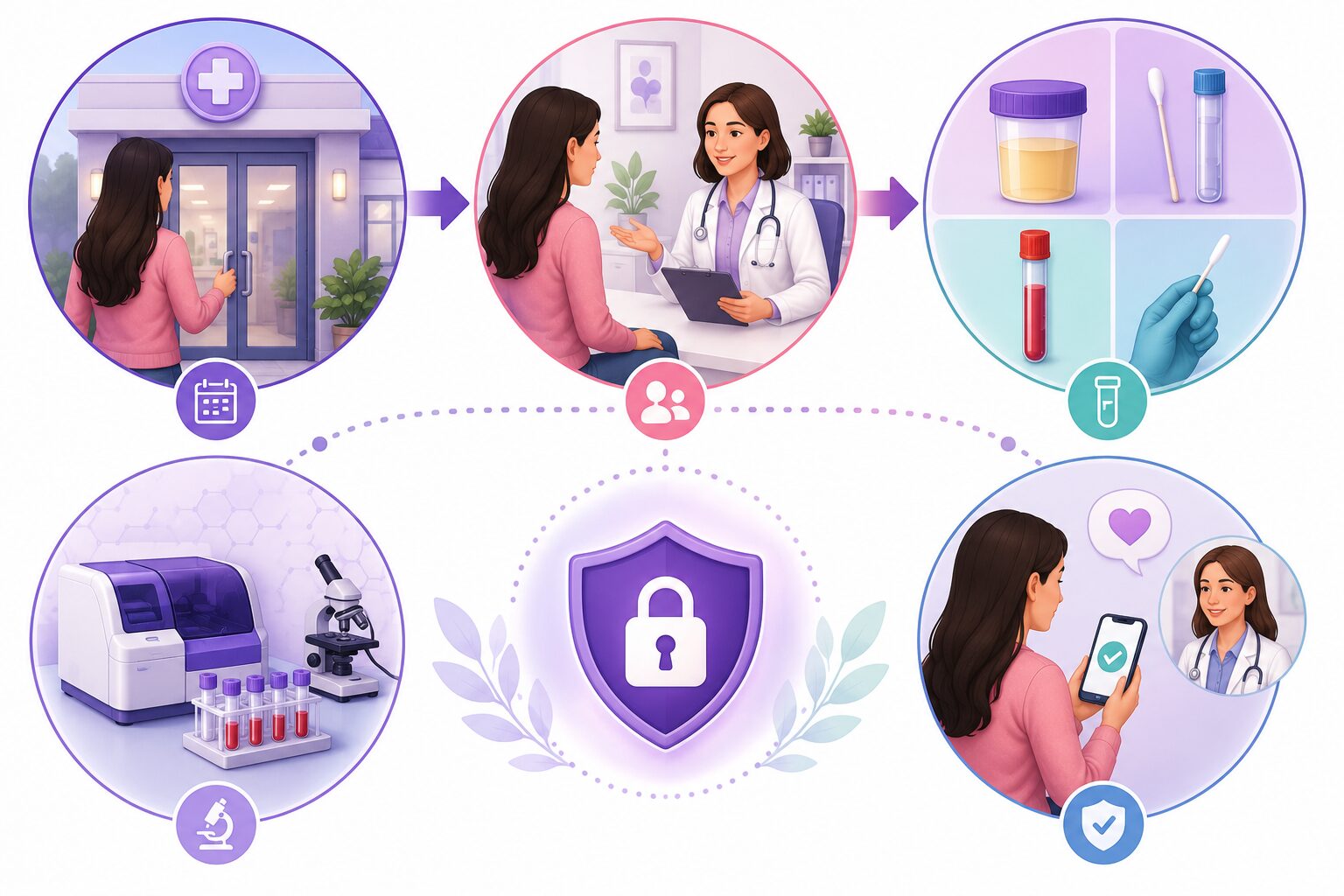
3. Complete the recommended testing
Depending on the infection being evaluated, testing may involve urine, blood, or another appropriate sample.
4. Review your results
Your provider can help explain what your results mean and whether additional testing or follow-up is needed.
5. Discuss next steps
If your result is positive, your healthcare provider can discuss appropriate treatment, follow-up, and partner-related considerations. If your result is negative but testing occurred very soon after exposure, additional testing may sometimes be recommended because the timing of testing can affect what an infection test can detect.
How Soon Should You Get Tested After Possible Exposure?
The right timing depends on the infection, the type of test used, and the timing and nature of the exposure. Learn more about how soon after exposure to get tested for accurate guidance.
Testing immediately after an exposure may not always provide a complete answer because some infections require time before they can be detected. A negative result obtained too early may need to be interpreted in the context of the possible exposure date and the specific test used.
If you are concerned about a recent exposure, do not assume that you must wait without speaking to a healthcare professional. A provider can help you understand:
- Which tests may be appropriate now
- Whether testing should be repeated later
- Whether symptoms require prompt evaluation
- Whether additional precautions are appropriate while you await results
For personalized guidance about testing timing, contact a qualified healthcare provider rather than relying on a general timeline found online.
Can STI Testing Be Done Through Telehealth?
In some situations, telehealth can be a convenient way to begin addressing an STI concern. A virtual appointment may allow you to discuss symptoms, possible exposure, testing needs, and next steps from a private location.
Depending on your situation, a provider may recommend laboratory testing, specimen collection, in-person evaluation, or follow-up care.
Serenity Choice Health offers virtual STI care options that may help patients discuss sexual health concerns privately and receive guidance about appropriate testing and follow-up.
Telehealth may be especially helpful for people who:
- Have difficulty traveling to a clinic
- Prefer to discuss concerns from home
- Want to speak with a provider before deciding what testing is needed
- Need follow-up after previous testing
- Feel anxious about starting the process in person
What Happens If Your STI Test Is Positive?
A positive result can feel overwhelming, but you do not have to interpret it alone.
Your provider can explain what the result means and discuss appropriate next steps. Depending on the infection, treatment may be available, and follow-up may be recommended.
It is also important to ask questions such as:
- What infection was detected?
- What treatment or follow-up is recommended?
- Do I need another test later?
- Should my partner or partners be tested?
- When is it safe to resume sexual activity?
Indiana public health guidance also provides partner services and supports efforts to help exposed partners receive appropriate information and testing while protecting patient confidentiality.
What If Your Test Is Negative?
A negative result can provide reassurance, but the meaning of the result depends on the test and when it was taken.
If you tested because of a recent exposure, ask whether the timing was appropriate for the infection being evaluated. In some situations, a healthcare provider may recommend follow-up testing.
A negative result also does not necessarily mean that every possible STI was tested for. Always confirm which infections were included in your testing.
How Can You Protect Your Privacy During STI Testing?
If confidentiality is important to you, consider protecting your privacy by asking these questions before your appointment:
- How will my test results be communicated?
- Can I choose how I receive appointment reminders?
- What information may appear on billing or insurance statements?
- Which infections are included in my testing?
- How will my medical information be protected?
- Will I need an in-person visit or laboratory testing?

Privacy concerns can be particularly important when insurance is involved. Billing and insurance processes may create privacy considerations, so ask the provider about available options and how billing is handled before proceeding.
The best approach is to discuss your concerns directly with the healthcare provider so you understand the process before testing.
Why Choose Serenity Choice Health for Confidential STI Care?
When you are seeking confidential STI testing in Indiana, you deserve care that is respectful, clear, and focused on your individual needs.
Serenity Choice Health provides sexual health services designed to support patients through testing, treatment, and follow-up. The clinic highlights confidential care, virtual and in-clinic options, judgment-free support, and guidance for people seeking STI testing or treatment.
The goal is to make it easier to take the next step without feeling embarrassed or overwhelmed.
If you are concerned about a possible exposure, need routine STI screening, or simply have questions about your sexual health, contact Serenity Choice Health to discuss your options for confidential care.
FAQ Section
Is STI testing confidential in Indiana?
STI testing and medical information are generally handled as confidential healthcare information, although specific public health reporting requirements may apply to certain diagnosed infections. Indiana law also provides confidentiality protections for certain communicable disease information. Ask your provider how privacy, reporting, and billing apply to your specific situation.
Can I get STI testing if I have no symptoms?
Yes. Many STIs can occur without noticeable symptoms. Testing may be appropriate based on your sexual history, possible exposure, pregnancy status, or other risk factors.
How soon after sex should I get an STI test?
The appropriate timing depends on the infection and test being used. Testing too soon after exposure may not provide a complete answer. A healthcare provider can help you determine whether testing is appropriate now and whether follow-up testing may be needed.
What infections are commonly included in STI testing?
Depending on your situation, testing may include chlamydia, gonorrhea, HIV, syphilis, hepatitis B, hepatitis C, or trichomoniasis. Learn more about which STIs women should be tested for based on your individual risk factors.
Can I receive STI care through telehealth?
In some cases, yes. Telehealth may allow you to discuss symptoms, possible exposure, and testing needs privately with a healthcare provider. Depending on your situation, laboratory or in-person testing may still be necessary.
What should I do if I think I was exposed to an STI?
Contact a healthcare provider to discuss the exposure, symptoms, and appropriate testing timeline. Avoid assuming that a lack of symptoms means you are not infected, and ask whether testing or follow-up testing is recommended. You can schedule an appointment with Serenity Choice Health today.

Dr. James Carter is a board-certified physician and lead clinician at Serenity Choice Health, specializing in reproductive health access and medication abortion protocols. With over 20+ years of experience, he combines clinical expertise with patient-centered care to ensure safe, compassionate, and confidential reproductive healthcare.